Initiative Rule 2: Resource the few, or dilute the many.
A strategic initiative without sufficient resources is not a strategy. It is a DREAM 😴
Once the right strategic initiatives have been selected, they need to be properly EQUIPPED. This is where many organisations fail. Not because their initiatives are wrong, but because they launch too many of them with too little financial or human capacity.
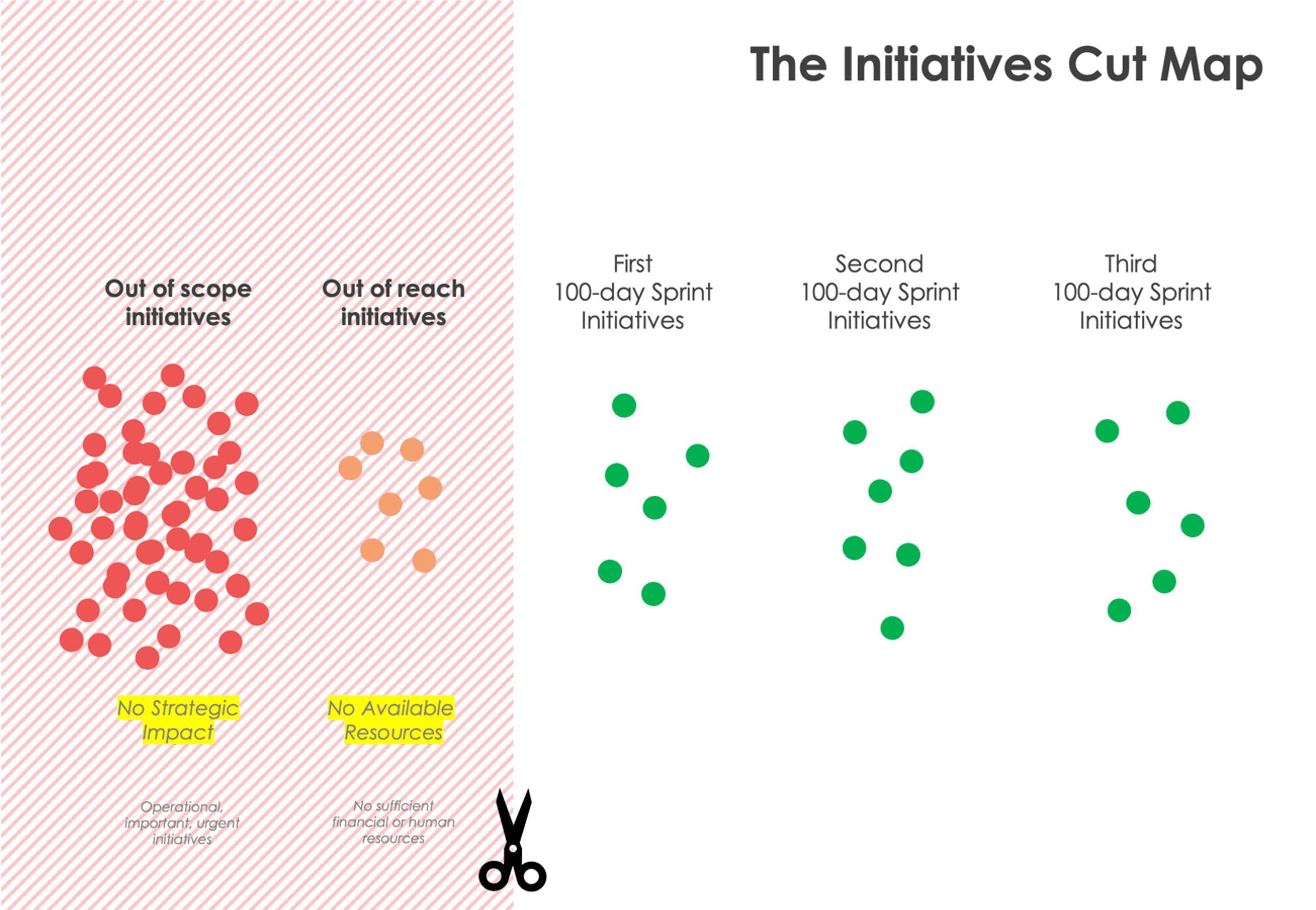
The first prioritisation cut is about strategic impact. It removes initiatives that are "out of scope" because they do not move the strategic needle.
The second prioritisation cut is about strategic resources. It parks initiatives that are "out of reach" because the organisation does not currently have the capacity to execute them properly. This second distinction matters. An initiative can be strategically relevant and still be unrealistic. It may have a strong impact on the strategic objectives, a compelling business case and enthusiastic leadership support. But if it does not have enough budget, enough people, enough time or enough executive attention, it will struggle to deliver.
Many strategy execution failures are born at this exact moment. Leaders approve too many initiatives at once. They underestimate the level of work required. They assume already busy people will somehow find the time. They spread budget too thinly. Then, a few months later, they wonder why progress is slow. The uncomfortable truth is that under-resourced initiatives rarely fail dramatically. They fail quietly. They remain open. They appear in reports. They move from one meeting to the next. They are always “in progress”, but never really breaking through.
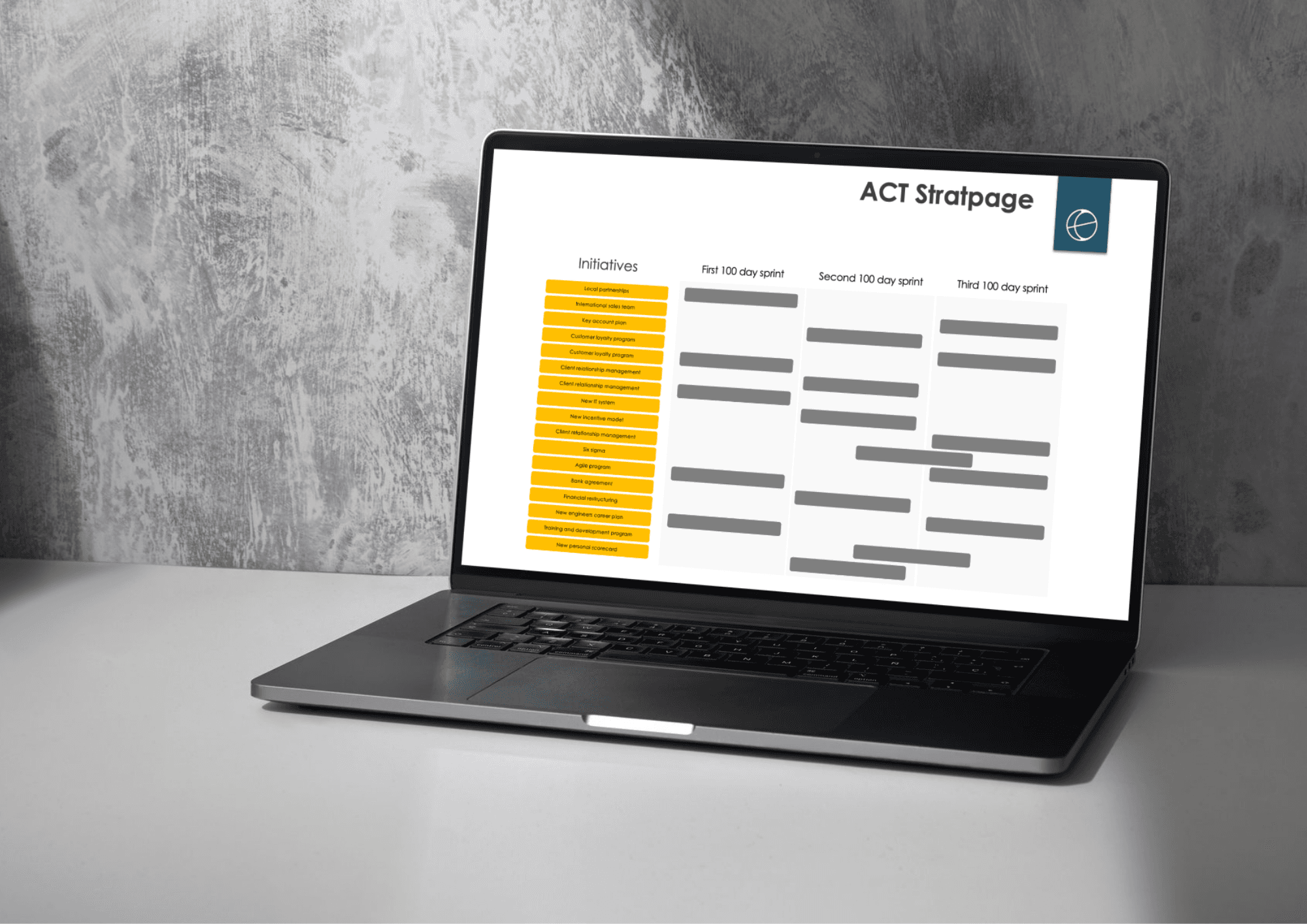
This is why the ACT Stratpage must be more than a list of good ideas. It must become a fully resourced strategic transformation roadmap. To achieve this, each initiative needs to be defined with enough clarity to understand what it will really take to execute. The scope must be clear. What is the initiative meant to achieve? The work plan must be realistic. What are the key phases, milestones, deliverables, start dates and end dates? The team must be visible. Who will lead the initiative, who will contribute, and how much leadership attention will be required? The budget must also be honest. What level of "strategic expenditure" is needed to give your initiatives a real chance of success? This is where ambition meets reality.
Every organisation would love to drive faster, further and bolder. Everyone wants the Ferrari version of their strategy. But sometimes the available budget, team and capacity only allow for a Toyota. That is not a failure. A Toyota can still take you to the destination. The real danger is pretending you are driving a Ferrari when you have only funded a bicycle.
Strategy execution requires hard and honest choices. You can do anything. But you cannot do everything. This principle is simple, BUT difficult. It requires leaders to accept that prioritisation is not only about deciding what matters. It is also about deciding what must wait.
Some initiatives should be launched immediately because they are high impact and within reach. They deserve the best resources, the strongest leadership support and the fastest start. Some initiatives should be parked because they are valuable, but not yet affordable. They may return to the roadmap later, once capacity improves or other initiatives have been completed. Some initiatives should be redesigned because their current version is too ambitious for the resources available. The Ferrari initiative may need to become a Toyota initiative, still useful, still strategic, but more realistic. And some initiatives should be stopped because they compete for resources without justifying their place in the strategic roadmap.
This is the second discipline of the ACT Stratpage: resource the few, or dilute the many.
A strategy does not fail only because of poor thinking. It also fails because too many organisations pretend that people, money and leadership attention are unlimited. The ACT Stratpage forces a better conversation. It asks leaders to match ambition with capacity. It makes resource allocation visible. It protects the most important initiatives from being starved by too many competing priorities.
Because great strategies do not need more promises. They need fewer, better, properly resourced initiatives.
Author: Anael Granoux | Strategy Advisor, Lecturer, Speaker